Arabic foundations
For students building useful vocabulary, listening confidence and a clearer understanding of everyday Arabic.
Alif is an Arabic and Islamic studies enrichment programme for children and teenagers in Dubai. Through stories, discussion, practical language exercises and groups of no more than two students, learners build communication, cultural awareness and positive character.
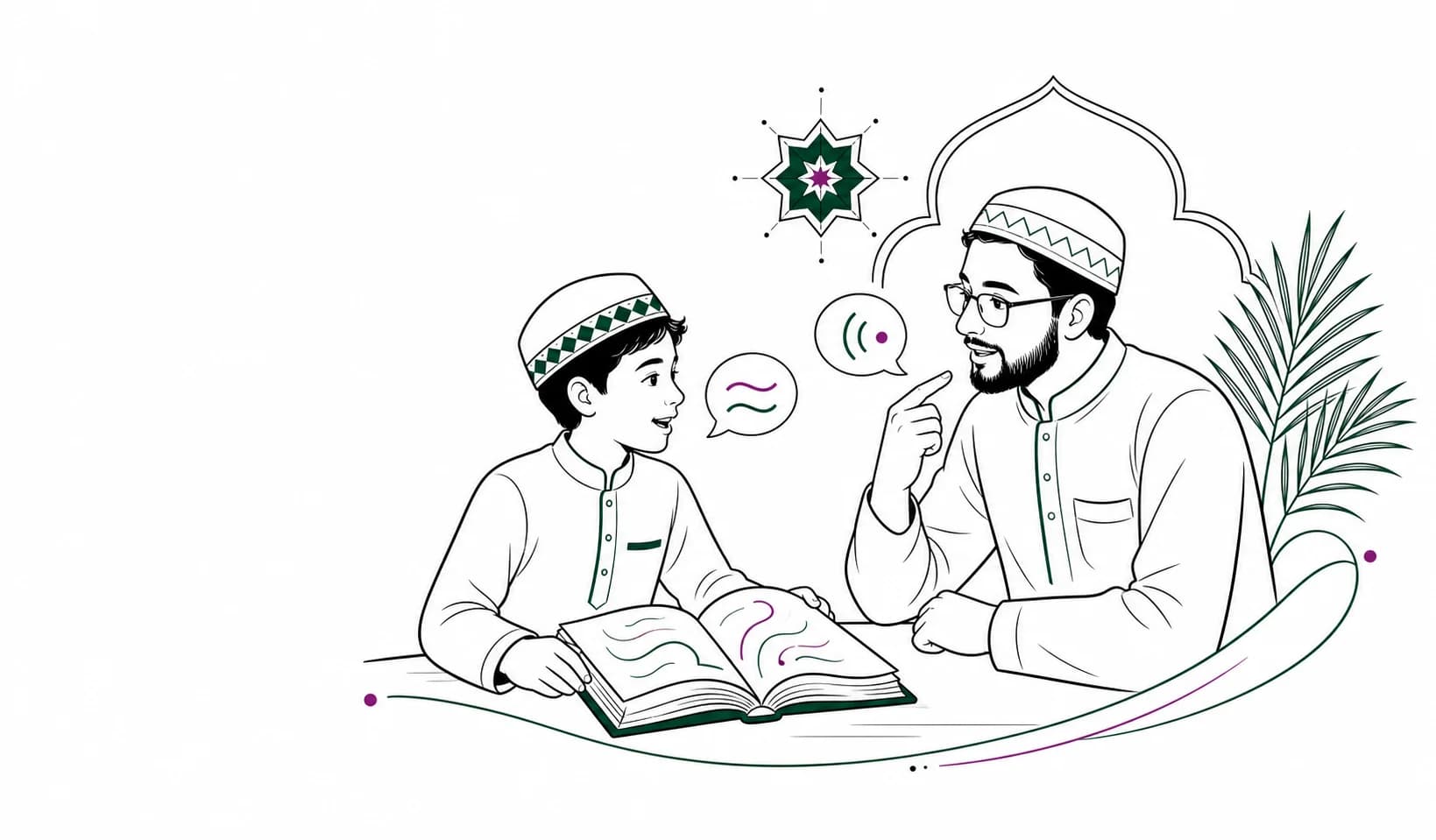
Alif helps students use Arabic more confidently while developing respectful communication, positive character and an appreciation of Islamic values, heritage and culture.
Students can begin with different levels of Arabic confidence and cultural understanding. These are not fixed levels: the initial review helps us decide where the emphasis should begin.
For students building useful vocabulary, listening confidence and a clearer understanding of everyday Arabic.
For students who need more confidence using Arabic in greetings, questions, descriptions and familiar situations.
For students who benefit from stories and discussion that connect language with positive character, heritage and culture.
The review gives Prep Up and the parent a clearer picture of how the child currently understands and uses Arabic. It is used to choose a useful starting point, not to label the student.
The expected review length is confirmed when booking because it depends on the learner's age and starting point.
Book a free assessmentArabic communication, stories, Islamic values and cultural awareness support one another. The initial review helps determine where to begin.
Building useful words and phrases through context, repetition and age-appropriate activities.
Practising pronunciation, understanding spoken Arabic and responding with increasing confidence.
Using stories and discussion to strengthen understanding, recall and thoughtful response.
Applying Arabic to greetings, questions, descriptions and familiar situations beyond a single exercise.
Exploring respect, positive character and thoughtful communication through age-appropriate learning experiences.
Developing curiosity about Arabic heritage and a respectful appreciation of cultural traditions.
Sessions adapt to the student's learning plan, but the sequence remains practical and purposeful. A session may move through these five stages.
The teacher introduces a story, image or familiar situation connected to the student’s current language priority.
Key vocabulary and expressions are introduced through listening, repetition and guided questions.
The student uses the new language in a short exchange, practical activity or guided discussion.
The teacher helps the student consider the values, character or cultural understanding present in the activity.
The teacher records what is becoming more secure and identifies the next Arabic communication priority.
The programme begins with the child’s current Arabic communication, then develops through stories, practical language use, discussion and regular review.
We identify how confidently the student understands and uses Arabic and which communication skills need attention first.
The starting point is translated into clear Arabic communication priorities suited to the student’s needs.
With no more than two students per teacher, there is time for stories, discussion, language practice and direct guidance.
We review what has become more confident, identify the next language priority and adjust the plan when needed.
Prep Up keeps parents informed about what their child understands and uses Arabic more confidently, which language skills still need attention and what they will work on next.
Book a free assessmentAlif is available through Prep Up in Dubai Silicon Oasis and Mirdif 35. Ask the team about current schedules and the most suitable starting point.
Prep Up Learning Centre
Prep Up Learning Centre
Straightforward answers about Arabic communication, values, cultural learning, sessions and progress.
Alif is designed for learners who would benefit from stronger Arabic communication and an age-appropriate appreciation of Islamic values, heritage and culture. An initial review helps us confirm the starting point.
The review helps us understand the student’s current Arabic vocabulary, listening, comprehension and spoken communication. We use this information to decide what should receive attention first.
Students can develop Arabic vocabulary, speaking, listening, story comprehension and everyday communication while exploring Islamic values, heritage and culture.
Sessions are limited to a maximum of two students per teacher, allowing time for direct guidance and questions. One-to-one sessions are available at an additional cost.
No. Arabic communication, stories, values and cultural learning are connected throughout the programme, but the emphasis is shaped by the student’s starting point and progress.
Prep Up explains which Arabic communication skills have become more confident, which areas still need attention and what the student will work on next.
Tell us how your child currently understands and uses Arabic. We’ll confirm the appropriate next step, branch, current availability and fees.